welcome to Henan Pingyuan Mining Machinery Co., Ltd.
- All
- Product Name
- Product Keyword
- Product Model
- Product Summary
- Product Description
- Multi Field Search


Views: 0 Author: Site Editor Publish Time: 2025-06-06 Origin: Site
In today’s highly competitive industrial landscape, efficiency and precision in material handling are more critical than ever. Whether it is mining, construction, chemical manufacturing, food processing, or pharmaceutical production, smooth and consistent material flow directly impacts the quality of the end product and the overall productivity of the process. Vibrating feeding equipment, as a key technology in bulk material handling, plays a vital role in streamlining operations by ensuring accurate batching and seamless conveying.
Vibrating feeding equipment works by generating controlled vibration forces that cause bulk materials to move forward along a feeding tray or chute in a steady, uniform manner. This approach offers advantages over conventional mechanical feeders, such as screw or belt feeders, which may cause material degradation, segregation, or inconsistent flow.
The equipment typically consists of a vibrating motor or electromagnetic vibrator that induces rapid oscillations. The vibration causes particles to lift and move incrementally forward. By adjusting the vibration parameters—frequency, amplitude, and tray angle—operators can finely tune the feed rate to meet process demands. This ability to modulate flow ensures that downstream equipment receives a steady supply of material, reducing the chances of blockages or interruptions.
Electromagnetic Vibrating Feeders: Known for their precise control and fast response, these are ideal for handling delicate or lightweight materials that require gentle movement.
Mechanical Vibrating Feeders: Built for heavy-duty applications, they excel in transporting coarse, abrasive materials such as ores and aggregates.
Pan Vibrating Feeders: Characterized by a vibrating pan or tray that gently moves materials without excessive impact, perfect for fragile items.
Linear Vibrating Feeders: Provide a direct, linear flow of material, often feeding crushers, conveyors, or screening equipment with consistent volumes.
Selecting the right type depends on material properties such as size, weight, abrasiveness, and moisture content, as well as process requirements.
Batching involves measuring and mixing raw materials in exact proportions, which is essential to produce consistent, high-quality products. Vibrating feeders improve batching in several key ways:
Highly Accurate Feed Rate Control: Fine-tuning vibration parameters allows exact control over material flow, which is critical for processes requiring strict adherence to formulations.
Minimized Material Segregation: Vibrating motion promotes uniform movement, preventing size or density-based segregation that can compromise batch homogeneity.
Gentle Material Handling: Vibration avoids excessive impact or abrasion, preserving the physical integrity of sensitive materials like powders, granules, or fragile ores.
Automation Compatibility: Modern vibrating feeders often integrate sensors and control systems that provide real-time feedback, enabling automated adjustments and reducing human error.
Chemical Industry: Precise dosing of powdered catalysts, additives, and raw materials ensures accurate chemical reactions and consistent product composition.
Food Processing: Consistent ingredient measurement is crucial for flavor, texture, and nutritional uniformity in products ranging from baked goods to beverages.
Pharmaceuticals: Stringent regulatory standards mandate exact dosing to maintain drug efficacy and patient safety.
By improving batching accuracy and consistency, vibrating feeders help manufacturers maintain compliance, reduce waste, and improve customer satisfaction.
Following batching, materials need to be transported through various processing stages such as crushing, grinding, mixing, screening, and packaging. Vibrating feeders play a pivotal role in maintaining continuous material flow:
Uninterrupted Material Supply: Consistent feeding prevents stoppages or slowdowns in downstream machinery, which can otherwise lead to costly downtime.
Uniform Material Distribution: Vibrating feeders spread materials evenly across conveyors, crushers, or screens, enhancing equipment efficiency and reducing wear.
Handling Versatility: Suitable for a broad spectrum of materials, including abrasive ores, fragile powders, sticky materials, and mixed particle sizes.
Easy Integration: Their compact and modular design facilitates smooth interfacing with other processing equipment, enabling efficient and automated production lines.
Mining: Vibrating feeders regulate the flow of ores to crushers and grinding mills, optimizing size reduction and improving overall throughput.
Construction: Automated feeding of aggregates to concrete batching plants improves mix uniformity and accelerates construction timelines.
Food Industry: Hygienic vibrating feeders transport delicate ingredients while maintaining sanitary conditions, essential for food safety.
Chemical Plants: Continuous feeding into reactors and mixers sustains high production rates while maintaining process stability.
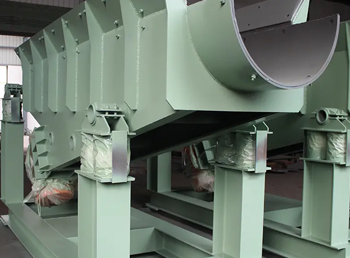
Several design aspects contribute to the superior performance of vibrating feeders:
Adjustable Vibration Controls: Allow operators to customize feed rates quickly to match changing process demands or material types.
Robust Construction Materials: Use of abrasion-resistant alloys, polyurethane linings, or wear plates enhances durability against harsh, abrasive materials.
Modular and Compact Designs: Simplify installation, allow quick maintenance, and enable flexible system layouts, saving space and reducing downtime.
Advanced Monitoring and Control Systems: Equipped with sensors measuring vibration intensity, feed rate, and material flow, enabling real-time process optimization and predictive maintenance.
These features collectively enhance equipment longevity, minimize operational costs, and maximize productivity.
Investing in vibrating feeding equipment offers multiple tangible benefits to industries handling bulk materials:
Improved Production Efficiency: Continuous and controlled feeding maximizes equipment utilization and throughput.
Consistent Product Quality: Precise feed control prevents batch inconsistencies and defects.
Lower Maintenance and Energy Consumption: Efficient vibration mechanisms reduce wear on both feeder and downstream equipment and consume less power than mechanical alternatives.
Enhanced Safety and Environmental Compliance: Reduced manual intervention lowers injury risk, while closed systems minimize dust emissions and spillage.
Cost Savings: Reduced downtime, lower waste, and less frequent maintenance translate into significant cost reductions over time.
Mining operations rely heavily on vibrating feeders to maintain steady ore flow into crushers and mills. The continuous feed minimizes equipment stress, reduces energy consumption, and increases throughput. When paired with screening and sorting systems, feeders enable efficient size classification, optimizing the entire mineral extraction and processing chain.
In construction, vibrating feeders automate the transport of aggregates such as gravel, sand, and crushed stone to batching plants. This automation ensures uniform feed rates and mix quality in concrete production. Additionally, vibrating feeders can perform onsite coarse screening, reducing the burden on downstream equipment and speeding up workflows.
Accurate dosing of raw materials and additives using vibrating feeders is critical for consistent chemical reactions and pharmaceutical formulations. The gentle yet precise feeding minimizes cross-contamination and ensures compliance with stringent industry standards.
Vibrating feeders are widely used to transport delicate food materials, such as grains, nuts, and powders, while maintaining hygiene and product integrity. Easy-to-clean designs meet strict sanitation requirements, and automation reduces manual handling, improving safety.
Vibrating feeding equipment is indispensable in modern material processing, providing precise control from batching to conveying. Their unique ability to deliver continuous, uniform, and gentle material flow significantly enhances product quality, operational efficiency, and equipment longevity. Across diverse industries—mining, construction, chemical, pharmaceutical, and food processing—these feeders streamline workflows, reduce costs, and improve safety.
For enterprises aiming to upgrade their material handling processes and meet increasing production demands, investing in advanced vibrating feeding equipment is a strategic decision. To explore tailored solutions and high-quality products, consider contacting Henan Pingyuan Mining Machinery Co., Ltd. Their expertise in vibrating feeders and bulk material handling systems can help you achieve greater operational excellence and sustainable growth.
