welcome to Henan Pingyuan Mining Machinery Co., Ltd.
- All
- Product Name
- Product Keyword
- Product Model
- Product Summary
- Product Description
- Multi Field Search


Views: 0 Author: Site Editor Publish Time: 2026-06-08 Origin: Site
In commercial rice milling, material handling directly dictates your final product profitability. High throughput requirements frequently clash against delicate grain structures. You must ensure gentle handling to minimize broken rice percentages. Facility managers face a constant struggle here. They try to balance permanent infrastructure against the dynamic flexibility required for seasonal surges. Varied layout configurations complicate daily operations. Efficient loading and unloading processes demand a more adaptable approach. We created this guide to bridge your evaluation gap. It provides a comprehensive, vendor-neutral framework. You will learn how to properly evaluate, size, and implement flexible conveying solutions across diverse processing environments. We help you move far beyond basic manufacturer spec sheets. Instead, we focus on tangible operational outcomes. You will discover how to optimize throughput while protecting grain integrity every step of the way.
System selection must balance throughput capacity with minimal friction to preserve grain integrity and reduce broken rice percentages.
A movable belt conveyor provides critical layout flexibility for loading, unloading, and bridging processing phases without permanent infrastructure costs.
Handling byproducts requires specialized configurations; a rice husk movable belt conveyor must prioritize dust mitigation and abrasion resistance.
Final procurement decisions should weigh food-grade compliance, maintenance accessibility, and integration with existing stationary equipment.
Every percentage increase in broken rice directly reduces your market value. Premium markets demand whole, unblemished grains. Processing equipment must guarantee gentle handling at all times. Aggressive bucket elevators often damage delicate grains upon scoop impact. High-speed augers cause similar abrasive degradation along the casing. You cannot risk this mechanical friction. Fixed systems severely limit your long-term adaptability. They create severe bottlenecks during peak harvest seasons. Inbound truck volumes overwhelm static receiving pits quickly. Retrofitting legacy mills poses massive logistical hurdles. Facility managers struggle to route materials around existing silos. You need versatile routing options to maintain throughput.
Integrating a Movable Belt Conveyor solves temporary routing issues effectively. It bypasses loading dock constraints without permanent construction. You can position it precisely where bottlenecks form. Operators can manage multi-silo distribution effortlessly. Core production continues without sudden halts. This agility transforms seasonal facility management.
Minimize drop heights to prevent impact damage.
Avoid steep transitions between processing phases.
Maintain consistent speeds to reduce grain collision.
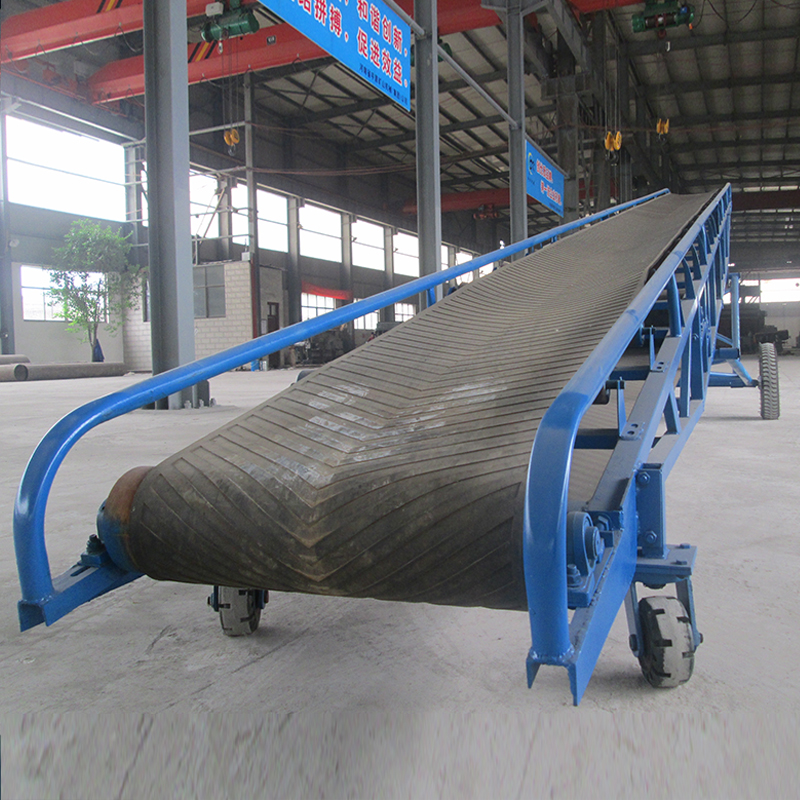
You must align belt width and motor power alongside facility tonnage targets. Engineers measure this capacity in Tons Per Hour (TPH). Bulk density varies wildly between paddy and milled rice. This variance directly impacts volumetric load limits. Undersized motors overheat quickly under heavy grain loads. Narrow belts cause costly side spillage during rapid surges. Spillage attracts pests and requires intensive manual sweeping.
Variable speed drives (VSD) remain absolutely mandatory for modern facilities. They let you adjust operations for different rice varieties seamlessly. Paddy rice flows entirely differently than processed brown rice. Milled white rice requires extremely careful, slow handling. VSD systems prevent spillage and minimize mechanical stress. You can dial in the exact speed required. Operators match the feed rate to downstream sorting machines. This synchronization prevents material piling at transfer points.
Chassis stability matters heavily under maximum load conditions. You must rigorously evaluate the equipment center of gravity. Weak chassis designs risk dangerous tipping incidents during operation. Secure wheel-lock mechanisms keep the unit firmly anchored. Industrial castor wheels must utilize durable polyurethane materials. Steel wheels damage epoxy warehouse floors rapidly.
Incline capabilities dictate how high you can route materials safely. Assessing maximum operational angles prevents dangerous product rollback. Rice grains slide easily due to low surface friction. Standard smooth belts usually handle 15 to 20 degrees. Exceeding this angle causes immediate throughput drops. Cleated designs can achieve up to 45 degrees safely. Chevrons offer a middle ground for gentle elevation.
Table 1: Belt Type and Maximum Incline Angle | |||
Belt Type | Optimal Material | Maximum Incline Degree | Rollback Risk Level |
|---|---|---|---|
Smooth Surface | Milled White Rice | 15 - 20 Degrees | High (if exceeded) |
Chevron Pattern | Brown Rice / Paddy | 20 - 30 Degrees | Medium |
Cleated Belt | Raw Paddy / Husks | 30 - 45 Degrees | Low |
Belt materials dictate both physical longevity and food safety. Polyurethane (PU) resists agricultural oils and abrasion exceptionally well. PU outlasts cheaper materials in high-throughput environments easily. Polyvinyl Chloride (PVC) offers a budget-friendly alternative for dry environments. PVC works well for short-distance, temporary routing tasks. Rubber belts suit heavy-duty raw paddy handling outdoors.
You must verify strict food safety compliance before purchase. Belts must meet FDA or USDA standards explicitly. Local regulatory equivalents also validate food-grade contact safety. Proper certification ensures no chemical leaching occurs during transport. It prevents dangerous biological contamination completely. Inspectors routinely check belt certifications during facility audits. Non-compliant materials result in severe regulatory fines.
Rice husks introduce entirely different handling challenges into the facility. They are highly abrasive and incredibly lightweight. These byproducts generate severe dust clouds during transit. You cannot treat them like whole grains.
Standard belts fail prematurely under such harsh conditions. Constant friction strips away basic top covers quickly. You need highly abrasion-resistant covers for reliable daily operation. A dedicated Rice Husk Movable Belt Conveyor resolves these distinct problems. It utilizes reinforced top layers designed for agricultural byproducts. This specialized build prevents catastrophic mid-season belt tearing.
Dust mitigation protects facility air quality and worker health. Airborne silica particles cause severe respiratory issues over time. Enclosed or semi-enclosed belt designs contain flying particles efficiently. Dust extraction ports vacuum loose silica actively during transport. Side skirting keeps lightweight husks contained on the moving belt. These features actively reduce combustible dust risks inside warehouses. Explosion prevention remains a top priority for facility safety.
Fine silica dust destroys standard mechanical components quickly. It acts like microscopic sandpaper inside moving parts. You must protect drives and bearings proactively. Follow these mandatory protection steps:
Specify IP65 or IP66 rated enclosed electric motors.
Install hermetically sealed bearings on all rotating rollers.
Implement daily pneumatic blow-down cleaning procedures for the chassis.
Inspect rubber seals weekly for early abrasive degradation.
Route exhaust air away from sensitive downstream sorting optics.
Frequent repositioning increases mechanical misalignment risks significantly. Operators move units across uneven warehouse floors constantly. Physical impacts against doorways bump the frame out of square. This shifting disrupts proper belt tracking immediately. Misaligned belts rub against the steel frame aggressively. This friction frays the belt edges within hours. You should evaluate models featuring auto-tracking crowned rollers. Crowned pulleys naturally guide the belt back to the center. Quick-release tensioning mechanisms simplify routine adjustments significantly. Operators can re-align the system without specialized tools.
High-humidity milling environments pose specific environmental threats. Southeast Asian facilities often battle constant moisture absorption daily. Traditional fabric-ply belts soak up ambient humidity rapidly. Belts must resist water ingress entirely to maintain tension. Microbial growth thrives inside porous belt materials. Fungal spores contaminate fresh rice batches during transfer. Closed-pore surfaces prevent bacterial harborage effectively.
Sanitation protocols demand easy mechanical access everywhere. Cleaners must reach the underside of the belt quickly. Hidden crevices trap dust and broken grain fragments. Quick-release tensioners drop the belt for thorough washdowns. Operators can perform wet or dry cleaning safely. Hygienic open-frame design prevents cross-contamination between product batches. Wash water drains away without pooling inside the chassis.
Chart: Common Risks and Operational Mitigations | ||
Risk Factor | Operational Impact | Mitigation Strategy |
|---|---|---|
Belt Misalignment | Edge fraying, motor strain | Install crowned pulleys and auto-trackers. |
Silica Dust Penetration | Bearing seizure, motor overheating | Use completely sealed, greased-for-life bearings. |
Moisture Absorption | Bacterial growth, belt delamination | Specify non-porous PU or PVC food-grade belts. |
Choosing a reliable manufacturing partner requires careful technical scrutiny. You must validate vendor claims through empirical data. Do not accept shiny marketing brochures at face value. Insist on reviewing actual material testing data first. You need proof of performance under real-world conditions.
Request Finite Element Analysis (FEA) reports from the engineering team. These structural reports demonstrate chassis integrity under maximum loads. FEA software highlights potential stress fractures before they happen. They also map out predicted component wear rates accurately. You need data specific to your exact grain profile. Heavy raw paddy stresses a frame differently than light husks.
Examine Warranty and Service-Level Agreements (SLAs) thoroughly. Mobility introduces unique physical stresses onto equipment frames. Pushing a heavy conveyor creates dynamic torque on the joints. Ask what exact damages fall under mobility-related wear and tear. You must ensure local availability of critical spare parts. Missing motors or replacement belts halt production entirely. International shipping delays cause unacceptable revenue losses. Fast local support minimizes unexpected downtime considerably. Choose partners who warehouse parts near your facility.
Choosing proper equipment requires moving beyond basic capacity metrics. You must thoroughly evaluate grain integrity alongside mechanical adaptability. Strict food safety compliance remains a non-negotiable baseline factor. A poorly chosen system degrades product quality daily.
The right mobile system acts as a flexible operational bridge. It connects isolated processing phases seamlessly together. It adapts your facility to sudden seasonal volume spikes. However, you must specify components correctly from the start. Abrasive husks and delicate milled rice demand entirely different approaches. Specialized byproduct handling prevents costly equipment failures.
Take these actionable next steps immediately to improve operations:
Audit your current facility layout for seasonal bottleneck locations.
Calculate your absolute maximum required throughput in TPH.
Identify areas where dust generation poses a combustible risk.
Request custom specification sheets from short-listed manufacturers.
Compare testing data against the stringent criteria outlined above.
A: When properly tensioned and operated at optimal speeds, belt conveyors offer comparable gentle handling to tube conveyors, though they require more rigorous monitoring of transfer points to prevent drop-impact breakage.
A: While technically possible, it is operationally risky due to cross-contamination and dust. It is highly recommended to use a dedicated rice husk movable belt conveyor with specialized dust skirting and abrasion-resistant belts.
A: Standard smooth belts generally max out at 15–20 degrees before rollback occurs. For steeper inclines, operators must specify cleated or chevron belts.
A: Mobile conveyors require frequent inspection of castor wheels, structural locking mechanisms, and continuous belt tracking checks, as physical relocation often shifts the chassis alignment.
