welcome to Henan Pingyuan Mining Machinery Co., Ltd.
- All
- Product Name
- Product Keyword
- Product Model
- Product Summary
- Product Description
- Multi Field Search


Views: 0 Author: Site Editor Publish Time: 2025-06-20 Origin: Site
In today’s rapidly evolving industrial landscape, efficient material transport within limited spaces has become a critical challenge for factories, warehouses, and construction projects—especially in urban environments. As cities expand vertically, and industrial real estate becomes increasingly expensive, companies are under pressure to find smarter solutions that optimize every inch of floor and vertical space. Traditional conveyor systems, which often require large installation footprints and offer limited flexibility, are no longer suitable for many modern projects.
Enter the vertical belt conveyor and sidewall belt conveyor—two compact yet powerful systems designed specifically to transport materials in tight, confined, or vertical environments. These conveyors represent the future of space-saving transport solutions, offering both performance and adaptability where horizontal space is at a premium.
One of the standout features of the vertical belt conveyor is its ability to move materials vertically without occupying valuable floor space. This makes it a highly efficient option for multilevel operations such as high-rise warehouses, mezzanine floors, and factory production lines that span multiple elevations.
A vertical belt conveyor uses a double or clamping belt mechanism where the material is securely sandwiched between two synchronously moving belts. This configuration ensures:
Smooth, controlled vertical lifting
No slippage or backflow of material
Continuous operation with low noise and energy consumption
This system can handle various types of loads—from small packaged goods and cartons to bulk materials—making it suitable for a wide range of industries including logistics, food processing, pharmaceuticals, and manufacturing.
Compact Installation: Vertical conveyors require very little ground space, making them ideal for congested facilities or retrofit applications.
Improved Safety: By reducing the need for forklifts, elevators, or manual lifting, vertical conveyors enhance workplace safety and lower injury risks.
Automation Compatibility: These systems can be seamlessly integrated with automated sorters, robotic arms, and pick-and-place systems.
Low Maintenance: With fewer moving parts than other lifting mechanisms, vertical conveyors offer long service life with minimal maintenance.
In short, a vertical belt conveyor system is the optimal solution for facilities that need to move materials between levels while conserving ground-level space.
For applications requiring steep angle conveying, the sidewall belt conveyor (also known as the corrugated sidewall belt conveyor) offers a unique and highly effective solution. This system allows material to be transported at angles up to 90°, making it perfect for vertical or nearly vertical material transfer without loss or spillage.
Sidewall belt conveyors consist of a flat rubber belt fitted with corrugated sidewalls and cross-cleats. These components work together to form compartments or pockets that safely carry materials upward without backflow or rolling. Materials stay securely in place during transport, even when the belt is positioned vertically.
This setup allows the system to:
Convey granular, powdery, or irregularly shaped materials
Replace multiple conventional conveyors and transfer points
Achieve high lifting heights within a limited horizontal space
Maximum Incline Capability: Transport angles of 30° to 90° without material rollback.
Anti-Spill Design: The corrugated sidewalls and cleats form a containerized transport path that minimizes dust and material loss.
Reduced Installation Footprint: By moving materials along steep inclines, these conveyors minimize the layout space compared to traditional flat or trough conveyors.
Energy Efficient: Fewer transfer points mean reduced energy consumption and better system efficiency.
Versatile Layouts: Suitable for Z-shape, L-shape, or straight-line configurations.
Industries dealing with bulk materials—such as mining, agriculture, chemicals, and construction—benefit immensely from sidewall belt conveyors, especially when operating in tight or vertical environments.
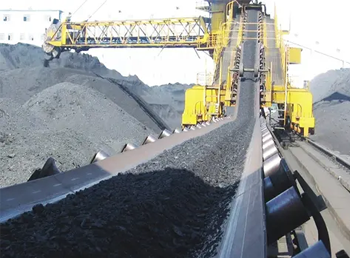
Traditional flat belt conveyors and bucket elevators have long been used for material transport. While effective in large open areas, they pose significant limitations when it comes to space, layout flexibility, and cost-efficiency in modern facilities.
Feature | Conventional Conveyor | Vertical Belt Conveyor | Sidewall Belt Conveyor |
Floor Space Required | High | Low | Low |
Maximum Incline Angle | ~20°–30° | 90° (vertical) | Up to 90° |
Material Spillage Control | Moderate | High | High |
System Integration | Limited | Excellent | Excellent |
Maintenance Requirements | Moderate to High | Low | Low to Moderate |
Suitable for Bulk Materials | Yes | Limited | Excellent |
Cost-Efficiency in Tight Spaces | Poor | High | High |
As the table shows, vertical and sidewall conveyors outperform conventional conveyors in nearly every category when operating in space-constrained environments. Their ability to increase throughput while reducing the operational footprint gives them a distinct edge in compact facility design and layout optimization.
With urban industrial development accelerating globally, the demand for efficient, space-saving transport solutions is growing across numerous sectors. Below are some common real-world applications of vertical and sidewall conveyors:
In multi-story warehouses, vertical belt conveyors are essential for quickly moving goods between levels without requiring elevators or forklifts. They allow for full utilization of vertical building space and enable seamless material flow within high-density environments.
Urban tunneling projects—such as subway construction or underground utilities—require systems that can lift excavated materials or supplies vertically to the surface. Sidewall conveyors are perfect here due to their steep angle capabilities and closed transport paths, which prevent material spillage and reduce dust.
Bulk cargo handling at docks often takes place within restricted spaces due to infrastructure constraints. Sidewall belt conveyors are employed to transfer cargo (like grains, minerals, or coal) from ships to storage facilities via elevated or steeply inclined paths, maximizing efficiency and minimizing ground clutter.
Manufacturers operating in urban industrial zones often deal with smaller facilities. Vertical and sidewall conveyors allow these plants to optimize vertical space, stack processes, and ensure continuous production flows within limited floor areas.
In sectors that prioritize hygiene and efficiency, like food and chemicals, these conveyors help minimize contamination risks by reducing transfer points. The closed structure of sidewall belts is especially beneficial in transporting powders or granules cleanly and safely in a compact setup.
As the need for space optimization and efficient material handling grows in modern industrial and urban settings, vertical and sidewall belt conveyors have emerged as essential tools for transforming how materials are moved. By enabling vertical or steep incline transport, these systems allow companies to make the most of limited space without compromising on safety, efficiency, or throughput.
Whether you're designing a multistory warehouse, a port loading terminal, or an underground excavation project, investing in space-saving conveyor systems is a forward-thinking strategy that delivers long-term operational and economic benefits.
At Henan Pingyuan Mining Machinery Co., Ltd. (PK Machinery), we specialize in custom-designed vertical and sidewall conveyor systems that meet the highest standards of performance and reliability. Our engineering team is ready to help you develop the most efficient and space-conscious solution for your unique material handling needs.
Visit our website www.pk-en.com to learn more or contact us today for a personalized consultation.
