welcome to Henan Pingyuan Mining Machinery Co., Ltd.
- All
- Product Name
- Product Keyword
- Product Model
- Product Summary
- Product Description
- Multi Field Search


Views: 0 Author: Site Editor Publish Time: 2026-06-03 Origin: Site
High-quality, contaminant-free compost remains a highly marketable commodity in today’s agricultural and landscaping sectors. Achieving this uniform product requires precise material separation. Evaluating sorting equipment is notoriously complex. Investing in an undersized or incorrectly configured machine leads to severe bottlenecked production. Wet organics often blind the screening mesh. This halts operations and degrades your final product value.
We aim to provide facility operators and waste management buyers an evidence-based framework. You will learn how to specify, size, and select equipment based on operational realities and output targets. A well-designed Trommel Screen bridges the gap between raw organic waste and a premium, retail-ready soil amendment. We will explore mechanical advantages, sizing parameters, and essential features needed to conquer high-moisture challenges. Operators must understand these principles to maintain continuous throughput and maximize their profit margins.
Trommel screens outperform vibrating screens in compost applications due to their tumbling action, which naturally aerates material and breaks up dense, wet clumps.
Accurate equipment sizing relies on balancing drum diameter (which dictates volume capacity and tumbling aggression) with drum length (which determines material residence time and screening thoroughness).
Moisture content is the primary variable affecting throughput; mitigating screen blinding requires specific mesh designs and integrated cleaning mechanisms.
Compost processing demands robust mechanical solutions. Organic materials behave unpredictably. They vary in density, moisture, and particle size. Traditional screening methods often fail under these conditions.
Vibrating screens utilize rapid shaking to pass particles through a flat deck. This mechanism works exceptionally well for dry aggregates. However, vibrating screens struggle significantly when processing wet organics. High-moisture compost tends to mat together. This creates a thick, impenetrable layer over the flat mesh. The vibrating motion cannot break these dense clumps apart.
Conversely, a Trommel Screen relies on a rotational lift-and-drop action. As the drum turns, internal lifters catch the compost. They carry it upward before gravity pulls it down. This continuous mechanical dropping shatters agglomerated compost blocks. The material constantly remixes, exposing new particles to the open mesh. This aggressive tumbling prevents matting and ensures consistent separation.
The tumbling mechanism delivers secondary biological benefits. It facilitates crucial final aeration. As the material drops through the drum interior, it mixes extensively with ambient air. This sudden oxygenation improves the biological stability of the finished product. It reduces anaerobic odors immediately before stockpiling.
Furthermore, this dynamic mixing enhances visual uniformity. The finished "fines" emerge fluffy and consistent. Landscapers and retail packagers highly value this aesthetic quality. It transforms basic decomposed waste into a premium, sellable compost commodity.
Modern compost streams contain heavy contamination. Plastic bags, hard plastics, and uncomposted green waste plague facility operators. A rotating drum isolates these contaminants efficiently. The desired fine particles fall through the mesh quickly. Meanwhile, the oversized materials ("overs") travel the entire length of the drum.
The tumbling action scrubs these overs clean. It knocks sticky compost off plastic films and large branches. The clean overs exit the rear conveyor. You can easily direct these materials for secondary shredding, recirculation, or landfill disposal. This precise split guarantees a pure final product.
Selecting the right machine dimensions determines your operational success. Buyers often misunderstand the relationship between drum size and production capacity. You must balance two critical geometric parameters.
Drum diameter primarily dictates your maximum volumetric feed rate. It controls how much material you can dump into the machine at once. A larger diameter provides a wider opening. This prevents bulky materials from bridging and blocking the feed chute.
Diameter also determines the physical height of the material drop. A wider drum lifts the compost higher into the air. This results in a more aggressive gravitational impact when the material hits the bottom. Heavier impacts shatter dense compost blocks faster. You can load larger diameter drums heavily without choking the machine.
Underestimating feed surges: Operators often feed material in massive bucket loads. Small diameter drums choke under sudden volume spikes.
Ignoring material density: Heavy, wet compost sits lower in the drum. It requires a larger diameter to achieve sufficient lift.
Drum length dictates material "residence time." This refers to how long the compost remains inside the active screening area. Material travels horizontally as the drum rotates. A longer drum forces the compost to tumble many more times before exiting.
Longer drums yield a significantly cleaner final product. They provide more opportunities for fines to pass through the mesh. If you require a very fine output size (like 3/8"), you need a longer drum. Fine mesh has less open area. Therefore, the material needs more time to find an open hole. Shorter drums work fine for coarse, high-volume rough screening where purity matters less.
Manufacturers frequently publish theoretical "maximum capacity" figures on spec sheets. You must view these numbers cautiously. Theoretical maximums assume dry, free-flowing, perfectly uniform materials. Real-world compost rarely meets these ideal conditions.
Realistic operational throughput drops based on material density and moisture levels. Heavy, wet compost moves sluggishly. It clings to the drum walls. You must slow the feed rate to prevent overloading the engine. Always calculate your required throughput based on your heaviest, wettest seasonal material. This conservative approach prevents costly production bottlenecks during rainy seasons.
Throughput Evaluation Chart
Material Condition | Moisture Level | Expected Throughput Impact | Operational Adjustment |
|---|---|---|---|
Dry, cured compost | < 30% | 100% of rated capacity | Maintain optimal drum speed |
Standard windrow material | 30% - 45% | 75% - 85% of rated capacity | Moderate feed rate, activate brushes |
Wet, clumpy organics | 45% - 55% | 50% - 60% of rated capacity | Slow drum speed, decrease feed volume |
Saturated sludge/biosolids | > 55% | < 40% of rated capacity | Maximum brush pressure, minimal feed rate |
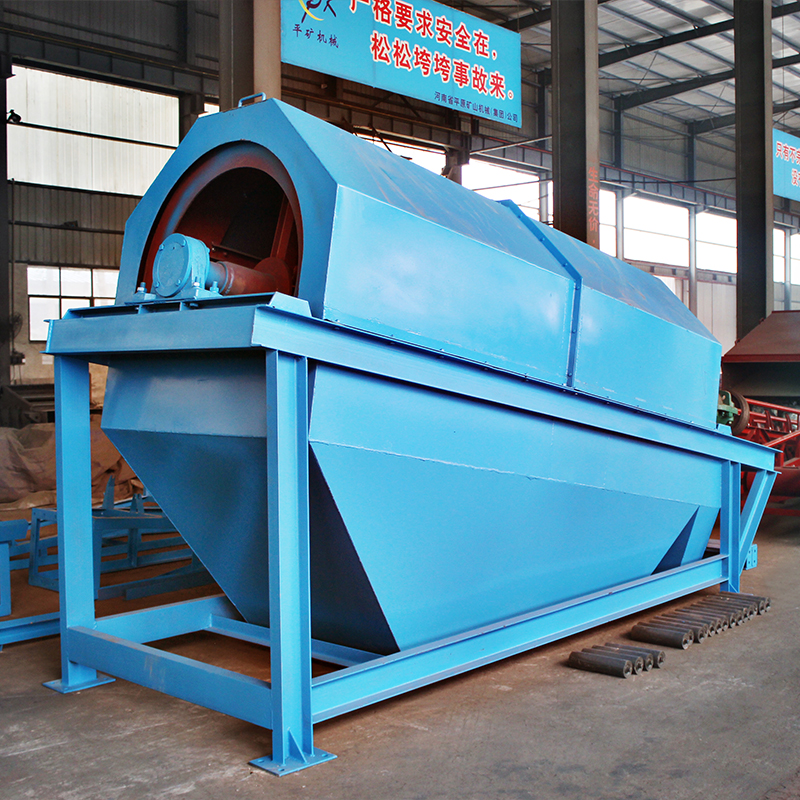
Screening wet compost presents the greatest challenge in organic waste processing. The interplay between mesh type and moisture dictates your daily success. You must optimize your screening media to maintain profitability.
Facility operators routinely face compost exceeding 40% moisture. This reality creates a severe blinding risk. Blinding occurs when wet material sticks to the screen wire. The sticky particles bridge the gaps between the wires. This rapidly reduces the open area of the drum.
When blinding goes unchecked, production halts entirely. The fines cannot escape the drum. They travel out the back conveyor alongside the oversized contaminants. You lose valuable product. Overcoming high moisture requires specialized screen media and aggressive cleaning tactics.
Choosing the correct mesh panel impacts your throughput directly. You must balance durability with open area percentages.
Screen Media Type | Characteristics | Best Application | Drawbacks |
|---|---|---|---|
Woven Wire Mesh | High open area percentage. Thin wire profile. | Drier materials, high-volume production, finer sizing. | Wears out faster. Prone to stretching under heavy loads. |
Punch Plate (Perforated Plate) | Solid steel sheet with punched holes. Highly durable. | Abrasive materials, heavy organics, large wood debris. | Lower open area percentage. Slightly slower throughput. |
Woven wire mesh provides the highest open area. It allows maximum material to pass through quickly. However, it wears out faster under abrasive conditions. Punch plate offers superior longevity. It resists stretching and handles heavy impacts easily. It also provides a rigid surface for cleaning brushes to scrape against.
You cannot process wet organics without active cleaning systems. Hydraulic or mechanical rotary brushes remain a non-negotiable feature. These heavy-duty brushes mount against the exterior of the drum. They spin rapidly as the drum turns.
The bristles continuously poke through the mesh holes. They dislodge sticky compost before it can blind the screen. You must adjust brush pressure carefully. Too much pressure destroys the bristles prematurely. Too little pressure allows blinding to occur. High-quality machines feature ground-level brush adjustment systems for safe, rapid tuning.
Market demands fluctuate constantly. You might screen a 3/8" fine topsoil blend on Monday. By Wednesday, a client might request a 3/4" rough landscaping compost. Operators must swap drum panels quickly to meet these demands.
Assess how fast your crew can change the screen media. Traditional wrap-around screens require laborious bolting and tensioning. Modern quick-tension systems use hydraulic or mechanical levers. They allow two operators to swap drum panels in under an hour. This modularity keeps your facility agile and responsive to customer needs.
Compost facilities rarely process identical material batches. Feedstocks change with the seasons. You must adapt your equipment settings to match the incoming waste stream.
Spring and autumn bring massive influxes of yard debris. Green waste contains long branches, fibrous vines, and tough leaves. These items easily tangle inside moving machinery. They form massive clumps inside the hopper.
Processing this material requires robust feeding mechanisms. You need aggressive feed conveyors to force bulky yard debris steadily into the drum. Smooth belts will slip under the weight. Cleated belts provide the necessary grip. You also need a wide clearance between the hopper exit and the drum entrance. This prevents long branches from wedging and stalling the machine.
Food waste and biosolids present entirely different challenges. These materials produce highly viscous, sticky, and heavy outputs. They lack the structural fibers found in yard waste.
You must use slower rotation speeds for these materials. If the drum spins too fast, centrifugal force pins the sticky sludge against the mesh. It will not tumble. Slower speeds allow gravity to peel the material off the walls. You also need specific stiff-bristle brush setups to manage this highly viscous output.
The infeed hopper serves as the gateway to your screening process. Evaluate hopper size and structural integrity closely. A larger hopper allows wheel loaders to dump full buckets efficiently. Operators do not have to wait for the hopper to empty completely.
However, a large hopper requires advanced control logic. It needs a robust load-sensing belt to prevent drum overloading. When the drum fills up, hydraulic pressure spikes. A load-sensing system detects this pressure increase immediately. It automatically pauses or slows the infeed conveyor. Once the drum clears, the conveyor resumes standard speed. This automation prevents mechanical failures and reduces operator fatigue.
Purchasing heavy machinery requires rigorous evaluation. You must align equipment specifications with your facility constraints and long-term business goals.
Your site layout dictates your mobility requirements. Compare tracked and wheeled mobile machines against stationary units.
Tracked Mobile Units: Ideal for large sites or multi-site contractors. You can drive them directly alongside massive compost windrows. This eliminates the need to haul raw material across the yard.
Wheeled Mobile Units: Perfect for towing between different regional facilities using a standard semi-truck. They offer excellent highway portability.
Stationary Units: Best suited for permanent, permitted indoor or outdoor facilities. They integrate seamlessly into massive, multi-stage processing lines.
Choosing the right power plant impacts your daily operational expenses directly. Diesel-hydraulic systems offer unmatched portability and brute force. However, they require rigorous engine maintenance.
Diesel-electric hybrids provide smoother operation and lower fuel consumption. They use a diesel generator to power electric drive motors. Full electric (grid-tied) machines represent the ultimate standard for permanent sites. They eliminate diesel emissions entirely. They drastically reduce noise pollution. Use electric drives wherever your site infrastructure allows.
Frame ease-of-maintenance as a critical performance metric. Difficult maintenance leads to neglected maintenance. Neglected maintenance leads to catastrophic equipment failure.
Look for specific design features that protect your mechanics. Swing-out engine cradles provide 360-degree access to filters and belts. Ground-level brush adjustments keep workers off ladders. Large, lightweight access doors make daily inspections effortless. When routine cleaning takes minutes instead of hours, your crew will actually perform it.
Never finalize a capital purchase based solely on glossy brochures. Spec sheets represent ideal conditions, not your operational reality.
Recommend buyers conduct a live material demonstration. Bring the manufacturer to your site, or take your toughest material to their testing facility. You must validate throughput claims using your specific compost blends. Real-world testing exposes equipment flaws quickly. Prioritize vendor support and parts availability over baseline sticker price. A cheaper machine costs exponentially more if you wait weeks for replacement bearings.
Securing high margins in the organics sector demands pure, consistent products. The right Trommel Screen acts as the heart of your operation. It balances aggressive tumbling capabilities with sufficient screening time. You must weigh drum diameter against drum length to achieve this balance perfectly.
Navigating seasonal moisture spikes requires careful preparation. Rely on the correct screen media and robust cleaning brushes to prevent catastrophic bottlenecks. Punch plates handle heavy abuse, while woven wire maximizes your throughput in dry conditions.
Urge your procurement team to look beyond initial capital output. Prioritize responsive vendor support, local parts availability, and transparent real-world testing. Demand a live demonstration using your wettest, heaviest material. By following this evidence-based framework, you guarantee a reliable screening process and a highly marketable compost product.
A: Diameter dictates your maximum feed volume and tumbling aggression. A wider drum prevents bridging and handles heavy loading. Length dictates residence time and screening efficiency. A longer drum provides more opportunities for fines to pass through the mesh, resulting in a cleaner, purer final product.
A: Industry standards vary based on the target market. High-end retail bags and premium topsoil blends typically require a 3/8" to 1/2" mesh size. Bulk agricultural applications or rough landscaping compost generally utilize a 5/8" to 3/4" mesh. Fast-tensioning screens allow you to swap these sizes easily.
A: Moisture acts as a severe limiting factor. As compost moisture exceeds 45%, throughput drops exponentially. Wet material clings to the mesh, reducing the open area. Processing high-moisture compost necessitates slower feed rates, optimal drum speeds, and continuous, aggressive brushing to prevent total screen blinding.
A: High-wear items require regular inspection to prevent downtime. The most common wear parts include the screen panels or mesh, rotary cleaning brushes, infeed and outfeed conveyor belts, drum support wheels, and internal lifter bars. Keeping these parts in stock ensures uninterrupted facility operations.
