welcome to Henan Pingyuan Mining Machinery Co., Ltd.
- All
- Product Name
- Product Keyword
- Product Model
- Product Summary
- Product Description
- Multi Field Search


Views: 0 Author: Site Editor Publish Time: 2026-07-08 Origin: Site
What is the maximum RPM for a screw conveyor?
This is a common question from buyers. The practical answer is simple: there is no single universal maximum RPM for every screw conveyor. The right speed depends on the conveyor design, material behavior, capacity target, and plant layout.
A screw conveyor may look simple. It uses a rotating screw flight to move bulk material through a trough or tube. However, its speed is not selected by guesswork. The screw conveyor maximum RPM must match many operating factors.
These factors include:
Screw diameter
Required capacity
Material bulk density
Material flowability
Screw pitch
Trough loading
Incline angle
Conveyor drive system
Wear limits
Safety margin
For buyers handling cement, grain, fertilizer, ash, sand, coal powder, and other bulk materials, RPM affects much more than output. It affects dust generation, material fallback, product damage, bearing load, power demand, and equipment life.
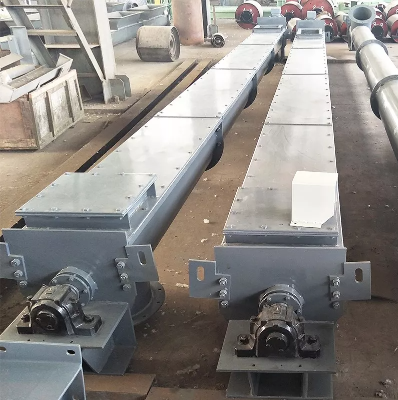
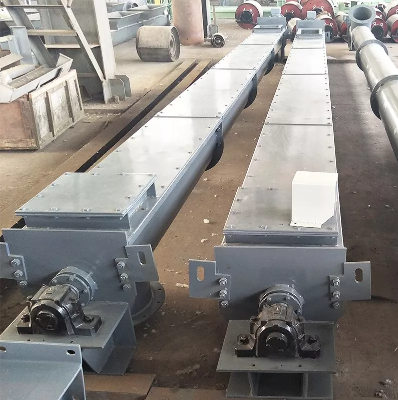
PK Machinery manufactures bulk material handling equipment for industrial conveying projects. Its screw conveyor solutions include pipe screw conveyor, U-type screw conveyor, and cement screw conveyor options.
This article explains screw conveyor maximum RPM, screw conveyor speed calculation, operating speed selection, capacity effects, speed limits, and common speed-related problems.
Note: The best screw conveyor speed is not always the highest speed.
A screw conveyor can have a maximum recommended RPM. However, this value is not universal.
Different screw conveyors may run at very different speeds. A small light-duty auger may run faster. A large industrial screw conveyor usually runs slower. The reason is simple. Larger screws carry more material per revolution and create higher torque load.
A high RPM may look attractive because it suggests higher output. In real production, it can create problems. It may increase wear, vibration, dust, motor load, and material damage.
So, the better question is not only, “What is the maximum RPM?” The better question is, “What screw conveyor operating speed gives stable capacity and safe operation?”
Maximum RPM is often listed in capacity tables or product references. These values are useful, but they are usually based on ideal conditions.
They may assume free-flowing, non-abrasive, dry materials. They may not apply to sticky, wet, abrasive, dense, or fragile materials.
For many industrial applications, a lower screw conveyor design speed is safer. It can reduce wear, improve feeding stability, and protect the conveyor drive system.
Some references mention screw conveyor speed ranges near 300–400 RPM. This can apply to certain small or light-duty systems. It should not be treated as a fixed answer for all projects.
Many industrial screw conveyors use lower speeds. Some larger conveyors may work at tens of RPM. A specific reference example selected a 16-inch screw conveyor and calculated 60 RPM for that application.
Larger screw diameter usually means lower RPM. Smaller diameter can use higher RPM when material flow allows it.
Small augers and industrial screw conveyors are not the same.
A farm auger for grain may run at a high speed. A heavy-duty screw conveyor for cement, ash, sludge, sand, or mineral powder may need slower operation.
Industrial projects need more attention to torque, dust control, bearing life, material loading, and continuous duty. They also need stronger speed selection logic.
Maximum RPM means the upper speed limit under selected design conditions.
Operating RPM means the actual working speed used during production. This is the number that matters most.
The correct operating RPM is often lower than the maximum RPM. It should support stable conveying, safe torque, acceptable wear, and reliable discharge.
| Term | Meaning | Practical Use |
|---|---|---|
| Maximum RPM | Upper recommended speed | Reference limit |
| Operating RPM | Actual working speed | Daily production setting |
| Design Speed | Calculated project speed | Engineering selection |
| Screw Shaft Speed | Shaft rotation speed | Drive and reducer matching |
Do not select screw conveyor speed by RPM alone.
Start from capacity, material, screw diameter, screw pitch, incline angle, and duty cycle. Then confirm the final screw conveyor rpm selection through supplier calculation or material testing.
Tip: Ask your supplier for both maximum RPM and recommended operating RPM.
RPM controls how often the screw flight turns.
When the screw turns faster, it can move more material per hour. This is true only when feeding remains stable. If material does not enter the conveyor evenly, higher speed may not increase real output.
Screw conveyor capacity is usually volumetric. It can be calculated in cubic meters per hour or cubic feet per hour. The mass output then depends on bulk density.
Speed is only one part of capacity.
Screw conveyor capacity and RPM are linked, but they are not the same. Capacity also depends on screw diameter, screw pitch, trough loading, material density, filling factor, and incline angle.
A larger screw can carry more material per revolution. A smaller screw may need higher RPM for the same volume.
A half-pitch screw carries less material per turn than a full-pitch screw. Modified screw flighting can also reduce effective capacity.
Higher RPM can reduce real performance in some applications.
Excessive conveyor RPM may cause:
Material fallback
Dust generation
Product degradation
Bearing stress
Shaft vibration
Higher flight wear
Motor overload
Poor discharge control
This is why stable output matters more than theoretical maximum speed. A conveyor running slower but smoothly is often better than one running fast and unstable.
A practical screw conveyor speed calculation follows a clear sequence.
Define the required capacity.
Confirm material bulk density.
Select trough loading.
Select screw diameter.
Check capacity at 1 RPM.
Adjust for pitch and flight type.
Calculate actual operating speed.
Confirm motor and reducer selection.
For example, a dense material may need a larger screw at lower RPM. A light and free-flowing material may use a smaller screw at higher RPM.
Any example capacity should be marked as needs verification until material and model data are confirmed.
Note: Screw conveyor speed calculation should use material volume, not only material weight.
Screw diameter is one of the main screw conveyor rotation speed factors.
Larger screws move more material per revolution. Because of this, they often need lower RPM. They also create higher rotating mass and higher bearing load.
A larger screw running too fast can increase vibration, noise, and mechanical stress.
Pitch affects how much material moves per revolution.
Standard pitch is common for general conveying. Short pitch and half pitch reduce capacity at the same RPM. They may be useful for inclined conveying, but they change the required speed.
Modified screw flighting also affects capacity. Cut flight, folded flight, ribbon flight, and paddles may support mixing or difficult materials. However, they can reduce conveying efficiency.
Dense materials need more torque.
Poor-flowing materials may need slower speeds to reduce plugging, bridging, and overload. Free-flowing non-abrasive materials may allow higher speed.
Material flowability also affects material conveying speed. A dry, free-flowing powder behaves differently from wet, sticky, or compacted material.
Abrasive materials should usually run at lower speeds.
High RPM can accelerate wear on:
Screw flight
Trough wall
Liners
Hanger bearings
Shaft seals
Discharge areas
When materials include sand, ash, mineral powder, or hard particles, wear control becomes important.
Incline angle strongly affects screw conveyor RPM selection.
As the angle increases, material fallback risk rises. Capacity usually drops, and power demand increases.
Inclined screw conveyors need more careful speed selection than horizontal conveyors. Lower pitch, tubular casing, or larger diameter may be needed.
A control-fed screw conveyor is different from a screw feeder.
A control-fed conveyor receives a regulated amount of material. A screw feeder may be flood loaded at the inlet. It must pull material from a hopper, bin, or silo.
Flood-loaded conditions need special design. They can create higher torque at startup.
The conveyor drive system must match the selected speed and torque.
Important parts include the motor, reducer, coupling, shaft, bearings, and safety guards. If speed is too high, these parts may overheat, vibrate, or fail early.
Tip: Check torque and startup load before confirming screw shaft speed.
Start with the required throughput.
Buyers may provide capacity as:
t/h
kg/h
m³/h
ft³/h
Mass flow must be converted into volume flow. A screw conveyor moves material by volume, not by weight alone.
Capacity data should be marked as needs verification until material, model, and layout are confirmed.
Bulk density is essential.
For example, 10 t/h of dense cement requires a different screw conveyor speed than 10 t/h of light powder. The weight may be the same, but the volume can be very different.
This is why suppliers ask for material name, density, particle size, and moisture level.
Next, select screw diameter and trough loading.
Larger diameter can move more material per turn. Lower trough loading may be needed for heavy, abrasive, or sluggish materials.
Trough loading also affects wear and power demand. A heavily loaded conveyor may need more torque and stronger components.
Pitch and flight type change capacity.
Short pitch, half pitch, ribbon flight, cut flight, and paddles can all change material movement. They may improve control, mixing, or difficult material handling. They may also lower conveying capacity.
So, a correct calculation must adjust for the screw flighting design.
After diameter, pitch, loading, and material data are selected, the operating RPM can be calculated.
The final RPM should not exceed the maximum recommended speed for the selected conveyor size and material condition.
It should also match motor power, reducer ratio, shaft strength, bearing rating, and safety requirements.
| Selection Step | Why It Matters |
|---|---|
| Required capacity | Defines output target |
| Bulk density | Converts weight to volume |
| Screw diameter | Affects volume per revolution |
| Screw pitch | Changes material advance |
| Trough loading | Affects filling and wear |
| Incline angle | Changes fallback and power |
| Drive system | Confirms torque and speed |
Note: A correct screw conveyor operating speed needs both calculation and application review.
Excessive RPM can create several problems.
It may cause dusting, product degradation, excessive wear, high noise, shaft vibration, bearing overheating, and reduced equipment life.
Fine powder may become more airborne. Fragile material may break. Abrasive material may wear screw flighting faster.
Low RPM can also create issues when capacity is insufficient.
Possible problems include poor discharge, material buildup, unstable feeding, slow production, and process bottlenecks.
If the screw runs too slowly, it may not clear material from the inlet area. This can increase load and reduce feeding stability.
Speed-related problems are often visible in production.
Common signs include:
Reduced throughput
Frequent blockage
Excessive vibration
Bearing overheating
Dust leakage
Motor overload
Material fallback
Uneven discharge
These problems may come from speed, pitch, feed rate, material behavior, or conveyor layout.
A variable frequency drive can help adjust screw conveyor operating speed.
It is useful for controlled feeding, different materials, batch operation, and process tuning. It gives operators more flexibility during startup and adjustment.
However, VFD control cannot fix a wrongly sized conveyor. If the screw diameter, pitch, or drive power is wrong, speed control alone is not enough.
Tip: Use VFD control for tuning, not for correcting poor conveyor sizing.
Horizontal screw conveyors are usually easier to size.
They can provide stable capacity when feeding is controlled. RPM should still match material density, screw diameter, trough loading, and pitch.
A horizontal conveyor for dry grain may use a different speed from one handling abrasive ash or fine cement powder.
Inclined screw conveyors need more careful speed selection.
As the angle increases, fallback risk increases. Capacity may decrease, and power demand may rise.
In some cases, lower pitch, tubular casing, or larger diameter can improve performance. A higher speed is not always the right answer.
Cement screw conveyors must balance output, dust control, and power demand.
Cement and fly ash can create dust. They can also place steady load on the drive system. The screw conveyor speed range should match the required batching or silo discharge rate.
PK Machinery provides cement screw conveyor options for cement-related feeding and conveying systems. Buyers should confirm final RPM based on cement type, bulk density, conveying distance, incline angle, and required capacity.
Pipe screw conveyors use an enclosed tubular casing.
They can reduce dust leakage and improve material containment. They are often used for powders, granules, ash, cement, fertilizer, and similar materials.
Their RPM should consider material buildup, access for cleaning, sealing needs, and drive load.
U-type screw conveyors are common for horizontal or low-angle conveying.
They offer easier inspection and cleaning than many tubular designs. Their speed should match the material and the required capacity.
A U-type conveyor may be a good choice when maintenance access matters.
Note: Different screw conveyor applications need different speed limits.
Before asking for a final RPM, prepare the project data.
A complete RFQ helps the supplier calculate speed more accurately. It also reduces design mistakes.
Provide the following information:
| Data Type | Required Details |
|---|---|
| Material data | Name, bulk density, particle size, moisture |
| Flow behavior | Free-flowing, sticky, abrasive, dusty, fragile |
| Capacity target | t/h, kg/h, m³/h, or ft³/h |
| Layout data | Distance, incline angle, inlet, outlet |
| Operation mode | Batch, continuous, start-stop frequency |
| Drive needs | Motor limits, reducer type, speed control |
| Site limits | Space, sealing, cleaning, safety access |
If replacing an old conveyor, also provide current screw shaft speed, motor power, screw diameter, pitch, and problem symptoms.
Tip: Send photos and layout drawings when requesting screw conveyor rpm selection.
Maximum RPM should not automatically become the daily setting.
The daily operating RPM should support stable output, low wear, and safe mechanical load.
Dense materials need more torque.
If bulk density is ignored, the conveyor drive system may be overloaded. This can cause startup failure or motor overheating.
A speed that works horizontally may fail on an incline.
Inclined conveying needs more attention to fallback, pitch, casing style, and power demand.
Screw pitch and screw flighting affect capacity.
A half-pitch screw, ribbon flight, or paddle design may need different RPM from a standard pitch screw.
Capacity changes with material and layout.
A published capacity value should be treated as a reference. The final capacity should be confirmed by supplier calculation or testing.
Note: Most RPM selection mistakes start from incomplete material data.
There is no single universal maximum RPM for a screw conveyor.
Maximum RPM depends on screw diameter, screw pitch, material properties, trough loading, incline angle, drive system, and safety margin. A small auger may run fast, but a heavy-duty industrial screw conveyor often needs a lower, more stable speed.
The best approach is to select the correct screw conveyor operating speed through calculation. Start with required capacity and bulk density. Then confirm diameter, pitch, trough loading, incline angle, and drive power.
Higher RPM does not always mean better performance. It can increase wear, dust, vibration, noise, and overload risk. Lower speed may improve reliability, but it must still meet the required capacity.
For bulk material handling projects requiring screw conveyor speed calculation, capacity review, or conveyor drive system selection, PK Machinery can help buyers evaluate a suitable solution based on material properties, capacity targets, conveying distance, installation angle, and plant layout.
Contact PK Machinery to discuss your screw conveyor project requirements.
A: Screw conveyor maximum RPM is the highest safe speed for a specific design, material, and layout.
A: Screw conveyor speed calculation starts with capacity, bulk density, diameter, pitch, and trough loading.
A: Screw conveyor operating speed is often lower to reduce wear, dust, vibration, and overload risk.
A: Screw conveyor rpm selection depends on material flowability, screw diameter, incline angle, pitch, and drive power.
A: Screw conveyor capacity and RPM are linked, but capacity also depends on pitch, loading, and material density.
A: Yes. Screw flighting type changes material movement, mixing action, capacity, and required conveyor rpm.
A: Not always. Higher conveyor rpm may increase wear, maintenance cost, power demand, and downtime.
A: Wrong screw shaft speed may cause blockage, fallback, dust leakage, bearing overheating, or motor overload.
