welcome to Henan Pingyuan Mining Machinery Co., Ltd.
- All
- Product Name
- Product Keyword
- Product Model
- Product Summary
- Product Description
- Multi Field Search


Views: 0 Author: Site Editor Publish Time: 2026-06-12 Origin: Site
Modern bulk material handling faces a fundamental operational tension. Facility managers demand high-volume throughput. However, they must execute this within shifting site layouts. Active quarries, evolving warehouse floors, and busy multi-berth ports constantly change their spatial dynamics. Static infrastructure provides excellent volume but lacks necessary flexibility. Fixed lines simply cannot reach new extraction faces or alternate shipping vessels quickly.
Conversely, relying purely on wheel loaders offers flexibility but introduces severe inefficiencies. These vehicles suffer from slow transfer rates and high fuel burn. Here lies the strategic value of a mobile Belt Conveyor. It effectively bridges the gap between high-capacity fixed systems and agile vehicle fleets. You can quickly reposition these dynamic units to maintain optimal material flow as your site footprint evolves.
This guide delivers a vendor-neutral framework for industrial operators. You will discover how to evaluate if transitioning to dynamic conveying systems aligns with your specific throughput targets. We will explore asset reallocation, energy efficiency, and crucial site constraints to help you make informed procurement choices without overextending capital expenditure.
Operational Agility: Mobile systems eliminate the "double handling" of bulk materials, drastically reducing reliance on wheel loaders and trucks.
CapEx vs. OpEx: Initial investment is offset by reduced fuel consumption, lower vehicle maintenance, and decreased labor hours.
Evaluation Criteria: Procurement decisions must weigh throughput capacity against footprint constraints, power source availability, and site terrain.
Implementation Reality: Mobile systems require structured cable management, stable ground conditions, and clear operator safety protocols to function efficiently.
Bulk handling operations typically scale by adding massive fixed infrastructure. Over time, site dimensions evolve. Operations move further away from primary crushers or loading docks. When static setups can no longer reach the material, operators usually introduce heavy vehicles to fill the gap. This introduces several distinct business problems.
Double handling occurs when you move the same bulk material multiple times before it reaches its final destination. An excavator extracts the material. A wheel loader scoops it up. The loader drops it into a staging pile. Later, another truck moves it to the processing facility. Every extra touchpoint destroys your profit margin.
Wasted Fuel: Loaders burn significant diesel fuel during short-cycle shuttle runs.
Labor Drain: You pay operators for redundant transfer tasks instead of core extraction.
Equipment Wear: Tires, hydraulics, and engine components degrade quickly under continuous stop-and-go heavy loading.
By forcing payloaders to handle transport duties, you effectively double your cost-per-ton. You pay twice to move the exact same rock, grain, or ore.
Fixed belt systems fail to adapt when operating parameters shift. Consider an active aggregate quarry. The blast face continuously recedes. A stationary system requires expensive, time-consuming structural extensions to keep up. Similarly, port terminals face shifting demands. Different vessels require varied loading points along the berth.
You cannot simply drag a static frame across a dock. This rigidity forces operations to halt. Teams must dismantle, relocate, and reassemble fixed lines. This downtime aggressively damages weekly throughput quotas.
Relying heavily on vehicular traffic for short-distance transport introduces serious safety liabilities. Busy staging areas become chaotic. Blind spots on massive haul trucks lead to collision risks. Furthermore, continuous truck cycles generate excessive airborne dust and diesel emissions.
Environmental agencies heavily scrutinize particulate matter. Local regulations increasingly penalize high-emission sites. Heavy vehicle traffic directly contradicts modern sustainability targets. A smooth material flow drastically reduces the chaotic interactions between pedestrians, light vehicles, and heavy machinery.
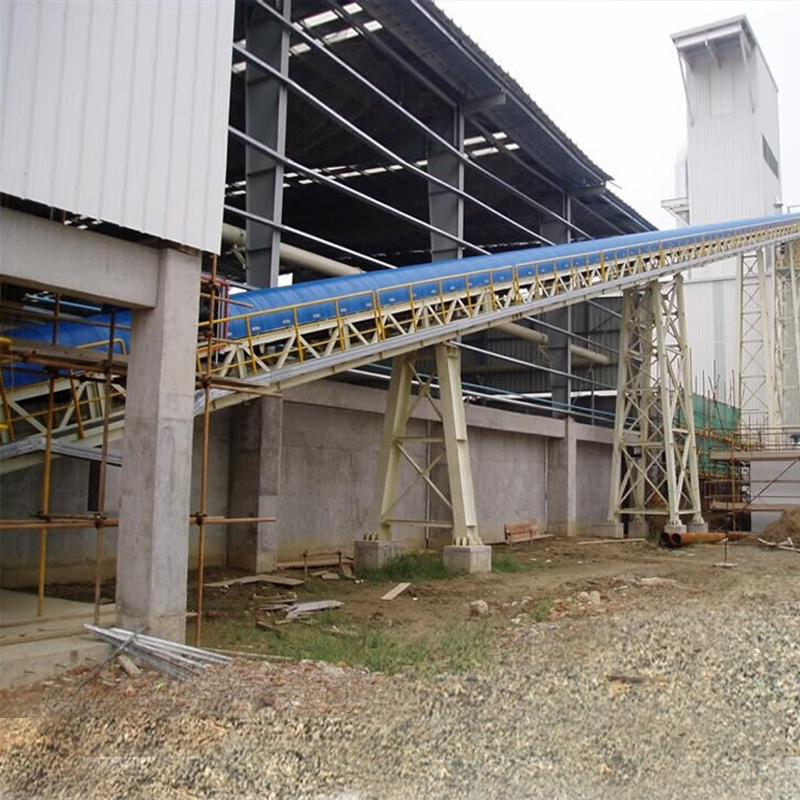
Transitioning from a loader-heavy strategy to a dynamic conveying model fundamentally shifts your financial metrics. The initial capital investment transforms into long-term operational savings. You achieve this through three primary mechanisms.
Deploying a mobile Belt Conveyor fundamentally changes your equipment roster. You no longer need expensive wheel loaders acting as simple transport shuttles. Instead, you free up these high-value machines. You can reassign them to primary extraction or final loading tasks.
This reallocation lowers overall fleet depreciation. You extend the operational lifespan of your yellow iron. By reducing operating hours on expensive loaders, you drastically push back replacement cycles. Fewer operating loaders also means fewer costly tire replacements and engine overhauls.
Modern mobile units champion the "plug and play" philosophy. Operators can easily reposition a track-mounted or wheeled unit. They often complete these moves in under an hour. This rapid deployment allows facilities to scale operations up or down effortlessly.
If seasonal grain harvests demand a sudden surge in ship loading, you roll the equipment into place. When the contract ends, you move it to another terminal. You avoid pouring concrete foundations. You skip lengthy permitting processes for permanent structures. This agility lets you capture temporary contracts you might otherwise turn down.
Continuous truck cycles rely entirely on diesel. Diesel prices fluctuate wildly and remain a massive operating expense. In contrast, running an electric or hybrid conveying system stabilizes your energy costs. Electric drives utilize grid power, which historically costs a fraction of diesel equivalent.
Chart 1: Operating Profile Comparison | ||
Metric | Wheel Loader Fleet (Shuttling) | Mobile Conveyor System |
|---|---|---|
Energy Source | 100% Diesel Fuel | Grid Electric / Hybrid / Diesel |
Labor Required | Multiple operators (one per vehicle) | Single operator (monitoring) |
Material Flow | Batch / Stop-and-Go | Continuous |
Wear Parts Focus | Tires, transmissions, engines | Rollers, belts, idlers |
Not all dynamic systems fit every site. Procurement teams must match equipment specifications to exact environmental conditions. You must analyze three critical dimensions before committing capital.
You must balance required tons-per-hour (TPH) against the physical limitations of your site. High TPH demands wider belts and faster belt speeds. However, massive equipment struggles in confined spaces. Narrow warehouse aisles or tight port berths dictate specific chassis restrictions.
Evaluate the Boom Length: Longer booms reach further into stockpiles or ship holds but require wider turning radii.
Assess the Stacking Height: Higher discharge points create larger stockpiles, saving ground space. But they increase the risk of wind-blown dust.
Calculate Transport Width: The unit must physically fit through your existing facility gates and access roads.
Industrial guidelines, such as those from the Conveyor Equipment Manufacturers Association (CEMA), provide reliable formulas to calculate necessary belt widths based on targeted TPH.
You must choose a power architecture that matches your site infrastructure. The wrong drive system creates massive logistical headaches.
Diesel-Hydraulic: These systems offer ultimate independence. You can operate them entirely off-grid. They excel in remote quarries or new mine developments. However, they carry higher maintenance burdens due to complex hydraulic circuits and engine servicing.
All-Electric: Electric drives provide massive operational savings and zero local emissions. They run quietly and require minimal maintenance. Yet, they demand reliable access to high-voltage grids. You must manage heavy trailing cables across the site.
Hybrid Drives: Many operators now select hybrid architectures. You can plug them into the grid when near established infrastructure. When you need to move to a remote stockpile, an onboard diesel genset takes over. This flexibility supports corporate emissions targets while maintaining operational independence.
The belt itself acts as the primary interface with your bulk material. You must perfectly match the belt type to the material's characteristics. If you handle highly abrasive ores, you need heavy-duty, rip-resistant rubber compounds. Standard belts will shred within weeks under such abuse.
Consider the material's angle of repose and moisture content. If you convey wet, sticky clay, you must equip the system with aggressive belt scrapers to prevent carryback. If you need to move material up steep inclines, standard smooth belts will allow the product to slide backward. In these scenarios, you must specify chevron or cleated profiles to grip the load effectively.
While dynamic systems solve many problems, they introduce specific site challenges. You must acknowledge and plan for these implementation realities to guarantee success.
Manufacturers design these units to move, but they strictly require level ground to operate safely. Mobile chassis rely on stable, compacted surfaces. Operating a fully extended boom on soft or severely sloped ground creates a massive tipping hazard.
You must prepare your staging areas. Potholes, mud bogs, or loose gravel can trap wheeled units. Track-mounted designs offer better flotation over poor ground, but they still require relatively level grading during active conveying. Failure to maintain site grading leads to catastrophic equipment roll-overs.
If you choose an all-electric unit, you must manage power delivery. Trailing heavy-duty high-voltage cables across an active site introduces serious risks. Wheel loaders and haul trucks can easily run over and sever these cables. This causes immediate power loss and poses severe electrocution hazards.
You must implement strict traffic management protocols. Operators must use cable bridges or trenches in high-traffic zones. You must train personnel to treat cable pathways as restricted zones. Proper cable management protects both your workforce and your equipment.
Transitioning away from fixed infrastructure alters your maintenance schedule. A stationary setup primarily requires roller replacements and belt tensioning. A mobile chassis introduces entirely new wear components.
Your maintenance team must now service wheels, rubber tracks, steering linkages, and hydraulic leveling jacks. Dust and grit aggressively attack these moving chassis parts. You must implement robust preventative maintenance schedules. Ignoring the mobility components eventually leaves the system stranded, neutralizing its primary advantage.
Moving from general interest to final procurement requires structured logic. You must translate site conditions into hard specifications. Follow these critical steps to ensure your selected equipment actually performs in the real world.
Before contacting any manufacturer, you must conduct a thorough site audit. Map out a comprehensive checklist defining your operational envelope. This prevents vendors from upselling unnecessary features.
Site Audit Checklist for Procurement | |
Audit Category | Specific Data Required |
|---|---|
Throughput Needs | Peak TPH, Average TPH, Surge Capacity requirements. |
Material Science | Bulk density, maximum lump size, moisture content, abrasiveness. |
Spatial Constraints | Maximum discharge height, available turning radii, max transport width. |
Power Access | Distance to nearest grid tie-in, voltage availability, diesel supply logic. |
Documenting these metrics guarantees the final unit fits both your production goals and your physical yard.
The best equipment fails if you cannot source spare parts. When evaluating vendors, prioritize localized OEM support. Bulk handling destroys wear parts. Rollers seize. Belts tear. Scrapers wear down to the metal.
You must ensure your chosen partner stocks critical components within a reasonable geographic radius. If a specialized hydraulic pump fails, waiting six weeks for international shipping destroys your quarterly targets. Ask potential vendors for references regarding their emergency service response times.
To justify the capital expense, you must perform deep financial modeling. Buyers should calculate their expected return on investment by comparing the upfront acquisition cost against projected operational savings.
First, calculate the offset costs of loader fuel. Subtract the diesel you no longer burn. Second, factor in operator wages. Moving from three loader operators to one system monitor saves substantial payroll. Finally, account for reduced material degradation. Conveyors handle friable materials much gentler than loader buckets, preserving product value. When you map these savings over a five-year horizon, the financial logic for acquiring dynamic equipment usually becomes overwhelmingly positive.
Integrating a mobile handling system transforms how you manage bulk materials in dynamic environments. They are not a wholesale replacement for dedicated fixed infrastructure. Instead, they serve as a strategic integration for high-variability zones like active quarries and busy ports. By bridging the gap between static lines and loose vehicle fleets, you eliminate costly double handling.
We see operators consistently achieve higher throughput while significantly dropping their fuel and labor expenditures. Success depends on rigorous site evaluation. You must match power architectures to your infrastructure and respect site grading requirements. Take action today by conducting a localized site audit. Map your peak capacity needs and request a simulated financial analysis from a qualified engineering partner to validate your specific use case.
A: Operators can usually deploy and reposition wheeled units in under 30 minutes. Track-mounted units might take slightly longer depending on the terrain. The process typically requires only one or two trained personnel to drive the unit, lower the hydraulic jacks, and initiate the startup sequence.
A: Yes. You can easily integrate them into static lines. Operators use specialized transfer chutes, impact hoppers, and variable height boom adjustments. This allows the dynamic unit to cleanly feed material onto a fixed line or receive material directly from a stationary discharge point.
A: You can expect an operational lifespan of 10 to 15 years for heavy-duty units. However, this lifespan heavily depends on strict preventative maintenance. Operating environments, the abrasive nature of the bulk materials, and consistent servicing of the mobile chassis dictate the ultimate longevity.
